
Bathsheba Deserved Better
How Evangelical teaching excuses sexual violence and trades accountability for redemption.

A friend and I were recently discussing the picture Bibles we grew up with. Anyone who thinks the Bible is kid-friendly probably hasn’t read much of it—or seen it graphically depicted. Even never-Christians could imagine some of the violent images we recalled, such as the crucifixion of Jesus or the ten plagues from Exodus, but those with deeper knowledge of the text may also envision Joab murdering Abner, or, most vividly in my memory, Jael driving a tent peg through the temple of a sleeping Canaanite commander.
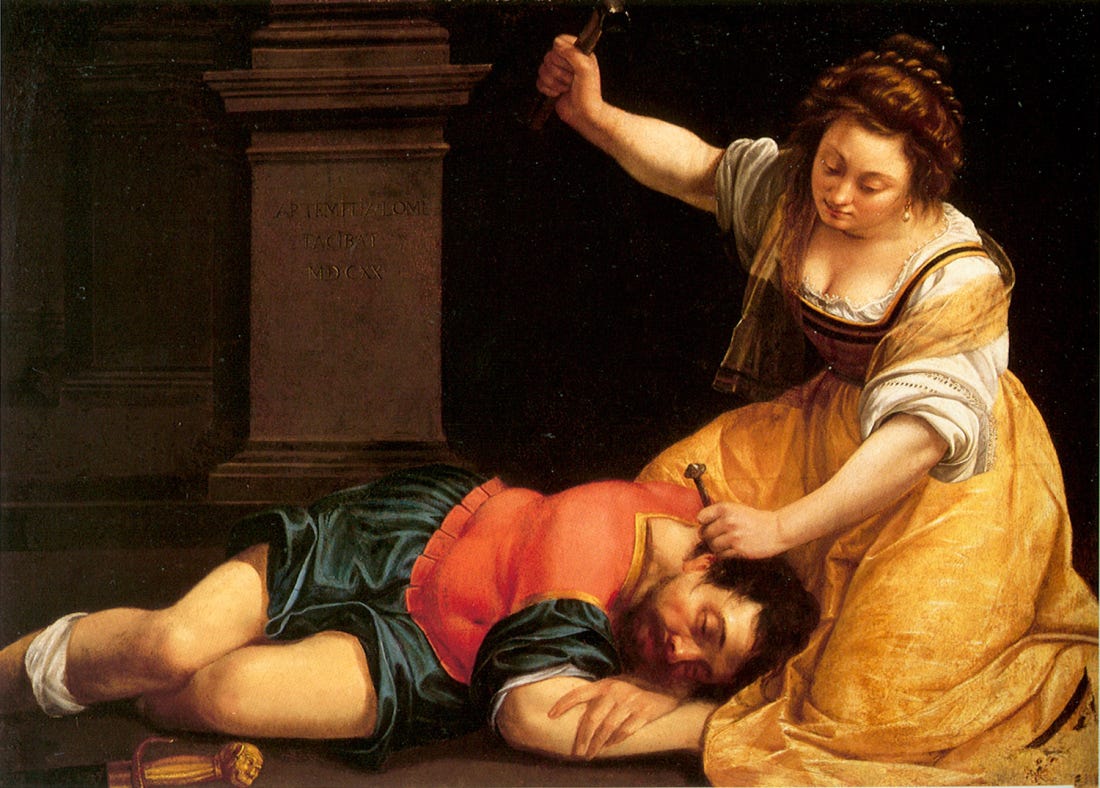
It may not be appropriate for children, but it is certainly inaccurate to accuse the Bible of being boring.
It’s no secret that the Bible contains loads of violence, sex, and all manner of indignities that follow human beings wherever we go. Certain stories, however, receive a fresh coat of paint before being presented to a crowd, and in doing so, some of the most important details are covered up to create a more useful canvas.
If you grew up Evangelical around the time I did, you probably first heard the story of David and Bathsheba with the visual aid of a flannelgraph. That was certainly not the last time you heard it, as it is a frequently preached passage. It comes up in messages about repentance, or God using flawed people, or the compounding nature of sin, or even how idleness leads to sin. But the account was generally told thusly:
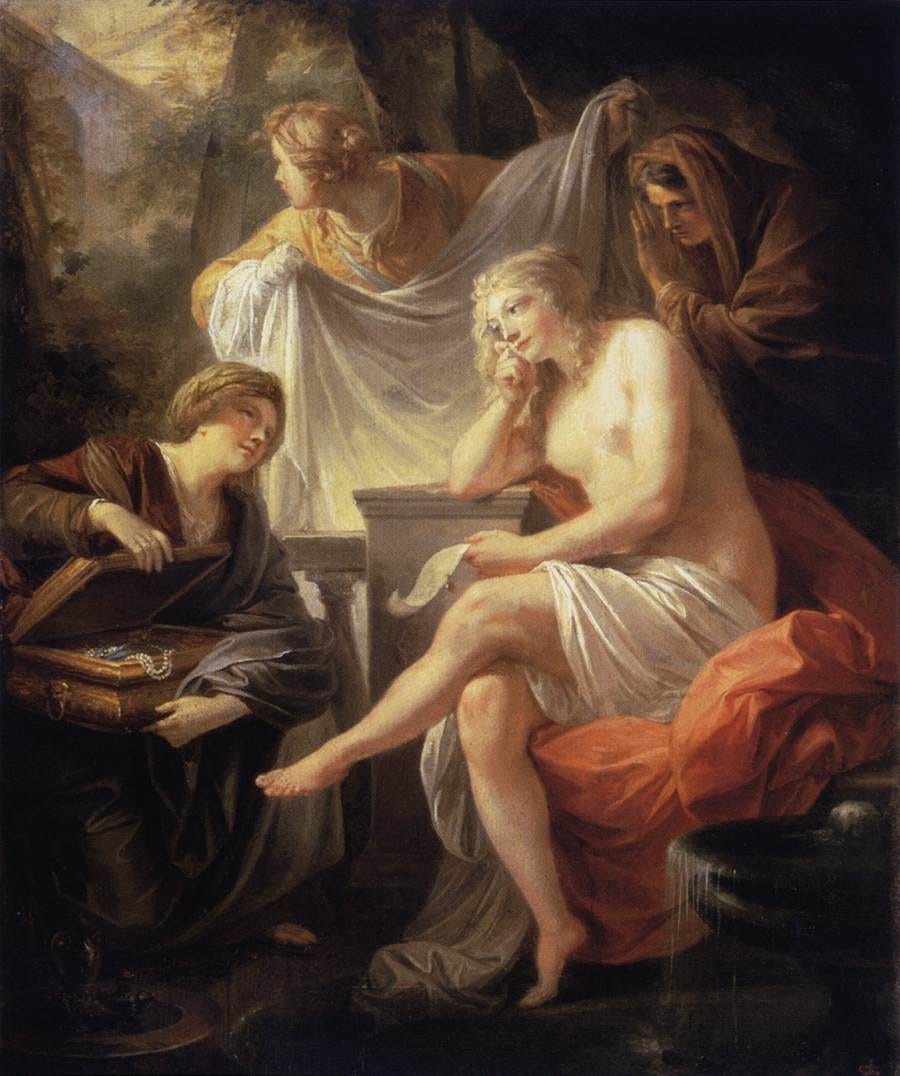
King David sent his army to war, but he stayed home. One day, as he was walking on his palace roof, he noticed a beautiful woman bathing. He found her to be very desirable, so he sent a servant to go get her and bring her to him, and he slept with her.
Some weeks later, the woman—Bathsheba—sent word to the King that she was pregnant. Bathsheba’s husband, Uriah, was away at war, so David called him home and told Bathsheba to sleep with him. Uriah, however, refused out of respect for the rest of the soldiers who were still on the battlefield. When that didn’t work, David wrote to the commander of the army and told him to put Uriah on the front lines. He obeyed, and Uriah was killed.
David’s problem is resolved, and he gets to keep Bathsheba and their baby. But then, Nathan the prophet comes and convicts David of his sin. David is greatly troubled and deeply sorry for sinning against God. He puts on sackcloth and ashes and begs God for forgiveness. He is forgiven, but as punishment, his baby son is struck with an illness and dies. David accepts his punishment, praises God for his forgiveness, and returns to following closely after God’s heart.
This story is as commonplace to Evangelicals as Noah’s Ark or Moses parting the Red Sea, but the uninitiated may wonder why certain eyebrow-raising points are so quickly breezed over. I felt some discomfort with this story as I got older, but it wasn’t until my 20s that I finally admitted—to myself and to a few peers—how disgusting I found the telling of this tale.
Why are we talking about David as if he made a mistake and disobeyed God, and not that he kidnapped and raped Bathsheba, impregnated her, killed her husband, and then forced her to marry him? And then God punished David by killing her child. Do we ever once hear how she feels about any of this? Of course not. It’s not about her. It’s about David. The man after God’s own heart. (Thinking about it now, those two do seem like two peas in the same patriarchal pod.)
The lack of concern for or interest in women is by no means unique to the Bible. The ancient world (and a growing number of troglodytic Christian chauvinists nowadays) viewed women as property, and that couldn’t be plainer than in the person of King David. Bathsheba was one of the eight wives of David named in the Bible, and it’s speculated he had more, along with many concubines. Again, not unique to either the rest of the Bible or the rest of the known world at the time. What is unique, however, is the way Evangelicals have been taught to understand this behavior.
Pastors could preach this passage in a message about consent or autonomy or the evils of men who assume great power and use it to exploit and victimize those weaker than they. But in more than 30 years of attending church, I never once heard that sermon.
I do remember the David and Bathsheba sermon that finally broke me of any hope that Evangelicals might figure this one out. Throughout my 20s, I was a faithful supporter of Breakaway Ministries, a large Christian organization that operated on the campus of Texas A&M University. I didn’t attend that school, but I did attend Breakaway’s women’s conference one year, and was a supporter and admirer of the speakers and musicians who put on a great weekly show. (This included recurring worship leader Aaron Ivey, who was fired from his position as worship pastor at an Austin, Texas megachurch in 2024 for explicit text messages with males, including at least one who was a minor, and “a very clear pattern of predatory manipulation.”)
I loved the Breakaway messages, and I felt they often featured a compassion and humanity that was so often lacking in Evangelical sermons. So it was excruciating to hear a speaker do the equivalent of “but what was she wearing” rape apologia when he covered the story of David and Bathsheba. The preacher certainly put most of the blame on David, but also claimed that Bathsheba knew where she lived, knew the palace was next door, and would have known if she was visible to outside eyes while bathing.
To be fair, since then, I have heard pastors correct this very narrative, which, for most of my life, placed Bathsheba on her own roof while bathing, even though that is not what the text says. However, some still hold onto the victim-blaming narrative, including “Christian comedian” John Crist, who (seeing the pattern yet?) was accused by five women of sexual harassment and exploitative behavior, for which he offered a flaccid apology.

 Tiktok failed to load.
Enable 3rd party cookies or use another browser
(Let me just take this moment to say shame on you to the Christians who are helping Crist revive his reputation and career.)
As Evangelicals are taught to understand this story, David’s sins were not assault and abuse of power; they were sloth, lust, adultery, and eventually murder to cover it up. In place of any accountability—he did not lose his power, his title, or even his lasting reputation—he was privately confronted by another man, and he exhibited grief and contrition for about a week.
Others bore the scars of his abuse. Bathsheba lost her first husband and was bound to her abuser for the rest of her known life. Her firstborn son suffered for a week, probably in her arms, before God killed him. Some theologians also point to the horrific lives and deaths of David’s other children as delayed punishment.
But as for David, we were supposed to be satisfied that this stain on his reputation was known while we continued to sing songs about his victories, memorize his poetry, and hold him up as closer to God than anyone else in all of Scripture, except Jesus.
This is the man that Evangelicals have been comparing Donald Trump to for a decade, so no, I’m not surprised that they have little to say about Trump’s 38,000+ mentions in the so-far released Epstein files.
In 2016, when Donald Trump first ran for president, I was still a devout Evangelical. Then-president of Liberty University, Jerry Falwell Jr., endorsed him that year and said, "God called King David a man after God's own heart even though he was an adulterer and a murderer." (In case you’re curious, this was before the unearthing of Falwell’s sexual scandal, and accusations of blackmail and inappropriate behavior that led to his resignation in 2020.)
That same year, Franklin Graham—who last week was promoting “Balls In Your Mouth” singer, Kid Rock—compared Trump to both Moses and David, saying “there will never be a perfect candidate,” so at least we all knew he didn’t think Trump was perfect, just the best possible choice in a field of imperfect candidates. And in fact, his flaws (a lifetime of abuse, fraud, and racism) actually made him someone more likely to be used by God.
It was then that I began to realize that not only did David’s violence against Bathsheba not disqualify him, but that for some Evangelical leaders, it was actually the best thing he ever did for them. It became the theological justification for never disqualifying powerful men who committed sexual violence as long as they claimed to be forgiven by God. Without this “sin” (again: kidnapping, rape, murder), it would be harder to convince people that they should expect their religious or political leaders to have some extreme moral failings. If David had just, you know, not assaulted women, then there wouldn’t be an easy way to convince Christians to vote for a man who did.
By not being honest about the story of David and Bathsheba, Evangelical preachers trained their parishioners to see a violent, sexual predator and say, “This looks like a man after God’s own heart.”
Understanding how Evangelicals have been taught to recontextualize sexual violence as a mere indiscretion that should be corrected in private renders the current moment less confusing. But it’s important to understand another recontextualization that happened simultaneously. As often as I heard David portrayed as an adulterer rather than an assaulter, I heard consensual queer love portrayed as a sin so grotesque that it stood apart from any other sin. The tonal shift when an Evangelical pastor would utter the word “homosexual” alerted the listener that we were now discussing something truly vile—something we should have unequivocal disgust for. (It’s a good thing David never had a gay affair, or…)
Likewise, even if their name was rarely said from the pulpit, a political party that would align itself with filth such as two men loving each other was clearly in cahoots with the devil himself. To vote for that party was to choose a side in the spiritual war I believed was happening all around us—and to choose the side furthest from God.
After a lifetime soaked in such teachings, it was trivial for about 80 percent of voting Evangelicals to overlook the dozens of accusations against Donald Trump, the proof of his infidelities, and the court case that found him liable for assault and vote for him three times. After all, God doesn’t call the qualified; he qualifies the called (another oft-repeated thought-terminating cliche used to rebuff concerns about someone’s behavior).
And when more continues to be unearthed about the president, and when he unleashes violence and racism to distract from his alleged abuses, and when it becomes nearly impossible to find a single member of his inner circle who isn’t likewise implicated with one of the most prolific sexual traffickers of our time, his Evangelical supporters will continue to close their eyes and count him as an imperfect man whom God has forgiven, because at least he isn’t gay or a Democrat (anymore).
I don’t think that most Evangelicals enjoy feeling compelled to grant cover for a predator and someone clearly unfit to hold office. But I don’t think they ever let themselves think about it like that. Ultimately, they don’t think they’re protecting Donald Trump from accountability; they’re protecting what they believe is Jesus’ access to power. Because they truly believe that if the world were only ruled by Christians, everything would be better—as close to Heaven as is possible on Earth. But just as apologetics for the crimes of David made the Evangelical world less safe for women, the defense of Donald Trump, and by extension a large number of predators, again fails to protect vulnerable people.
I don’t know how much of the story of David and Bathsheba is true. I know that if it were anything close to the Sunday School flannelgraph lesson, Bathsheba deserved to have the truth about the abuse she endured told, and for her assaulter to be held accountable. Countless victims of sexual and spiritual abuse within Christian spaces deserved a culture that never excused such behavior, whether by a pastor or a biblical character. In the same way, the victims of the Epstein class deserve to be heard, believed, and for justice to be served to their perpetrator—even if he’s the President of the United States.
There is good evidence to doubt that any revelations about Trump will change what the majority of Evangelical leaders will say about him. They’ll likely continue to proudly support him, or to stay silent about specifics while continuing to imply a duty to support the Republican Party.
But for the scores of victims like Bathsheba, we are no longer willing to be treated as footnotes in powerful men’s redemption stories. We are using our voices and our traumas to demand the accountability that so many before us never received. We’re doing the work that shouldn’t be ours to prevent future victims of protected patriarchs, and we’re following morality straight out of the spaces that refuse to break ties with predators.
Bathsheba deserved better than to be the cost of David’s redemption arc. Those who heard her cries from between the lines of Scripture will no longer allow her story—or ours—to be erased in service of rehabilitating powerful men.
At least Veggietales portrayed Bathsheba as the poor man's beloved lamb stolen by the rich man and not the poor man's lamb who went willingly to the rich man and is equally if not more to blame because ew women.
A lot of land mines I hit in that one :P ha!
- When I think of victim blaming ("what was she doing") I also think.. well what was God doing? Cloud perving again? I accept every blaming the victim as also blaming God for setting it up and watching.
- The bible is very violent. Its been a while but how many people did God kill in the bible? How many did Satan (or figures people attribute to be Satan) kill? While I don't believe the characters are real, I do appreciate the truth telling "bad guy" over the prideful, arrogant, immoral "all-knowing" being that apparently has regrets but not enough to stop being terrible to the small flawed creatures He "loves".
- This also reminds me how easily innocent children get murdered in the bible. Sorry but blood cult stuff is really messed up. Passover, Canaanites, bears killing kids for making fun of a bald man, the unborn being property (not so "pro-life"), .... the Flood.
- Your point about people essentially being trained to accept deeply flawed people as "vessels" saddens me. If I am "failing" by not respecting or "following" a lying, bigoted, self serving convicted criminal that has proven his complete lack of humanity then I accept my failure. Then, I admit I have no clue what "moral good" is, as such Christians do, if they see it in Trump. As they say, "your boos mean nothing, I have seen what you cheer".
Good works in non-mysterious ways.